Semaglutide and Tirzepatide, known as GLP-1 receptor agonists, were first developed to help people with type 2 diabetes control blood sugar — and later gained attention for weight loss. Now, scientists are exploring another possible benefit: a lower risk of dementia.
What’s the Connection?
GLP-1 is a hormone that helps regulate insulin, appetite, and metabolism. Because metabolism, blood sugar, and inflammation all play key roles in brain health, researchers wondered if GLP-1–based drugs might protect the brain as well.
So far, several large studies have found that people taking GLP-1 medications appear to have a lower chance of developing dementia, compared with those on other diabetes treatments. The reduction isn’t huge — but it’s consistent enough to get attention.
How Might GLP-1 Help?
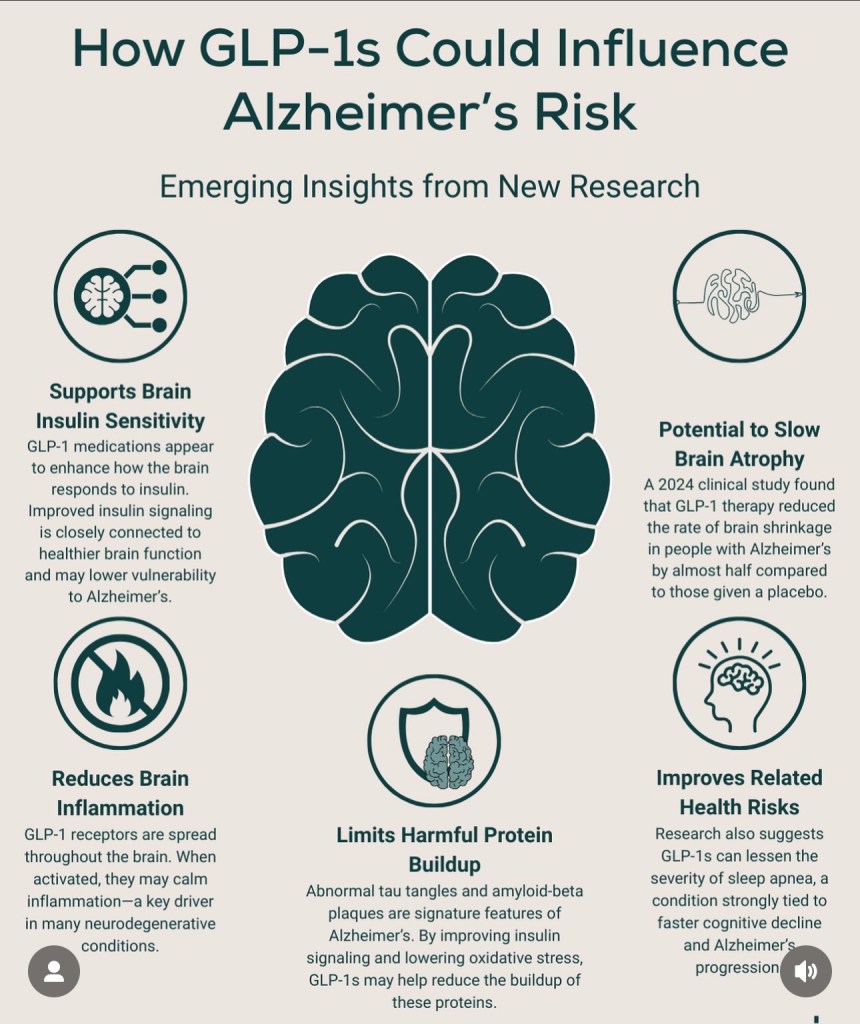
Scientists think these drugs may protect the brain by:
• Improving insulin sensitivity in the brain (important for memory and neuron health)
• Reducing inflammation and oxidative stress, which can damage brain cells
• Improving blood vessel health, supporting better blood flow to the brain
• Lowering obesity and diabetes risks, which are linked to cognitive decline
Animal studies even suggest GLP-1 drugs might help reduce buildup of harmful proteins like amyloid-beta, a hallmark of Alzheimer’s disease — though human data are still limited.
What We Still Don’t Know
The idea is promising, but it’s early. Most current evidence comes from observational studies, not clinical trials. We don’t yet know whether GLP-1 medications directly prevent dementia, which drugs work best, or how long someone would need to take them.
Researchers are now testing these drugs in people at risk for Alzheimer’s and other forms of cognitive decline. Results from these trials in the next few years should tell us much more.
GLP-1 drugs could one day become part of the toolkit for protecting brain health — but for now, their main role remains managing diabetes and weight. The best proven ways to reduce dementia risk still include staying active, eating well, controlling blood pressure, and keeping blood sugar stable. The great news is that GLP-1’s can be helpful in reducing blood pressure, keeping blood sugar stable, and helping you to make healthier food choices.
Disclaimer: I’m not a medical professional. All content shared is for informational purposes only and not a substitute for medical advice. Our licensed medical providers will review your medical history and prescribe accordingly. Results may vary. I may earn a commission from referrals or purchases made through my links.

 Wellness. Beauty. Confidence.
Leave a comment